
AAC for Teens: Building Voice and Independence

AAC for teens looks different from early intervention. An SLP guide to age-respectful vocabulary, peer connection, self-advocacy, and transition planning.
Empower AAC Users in Meaningful IEP Participation Decisions

Empowering individuals who use Augmentative and Alternative Communication (AAC) to lead their educational planning is both inspiring and essential. For speech-language pathologists (SLPs) and families, the Individualized Education Program (IEP), a personalized plan designed to support a student’s learning needs, presents a unique opportunity for AAC users to become active decision-makers. This guide provides clear, actionable […]
Designing AAC Home Programs That Work for Families

Creating an effective Augmentative and Alternative Communication (AAC) home program can unlock growth for high-tech speech device users and their families. When families work closely with speech-language pathologists (SLPs) and naturally integrate communication opportunities into daily routines, AAC use becomes sustainable. Rather than assigning structured homework, the focus shifts to practical strategies that blend communication into everyday […]
AAC support for SLPs: When You’re the District AAC Lead

Exploring Augmentative and Alternative Communication (AAC) opens up exciting opportunities to support students in your school district. Even without formal training or ample resources, stepping into the role of “the AAC person”allows you to make a meaningful impact while growing your skills alongside your other responsibilities. This guide validates your experiences, cuts through the overwhelm, and provides […]
AAC in Early Intervention: Developing Routines‑Based IFSP Goals
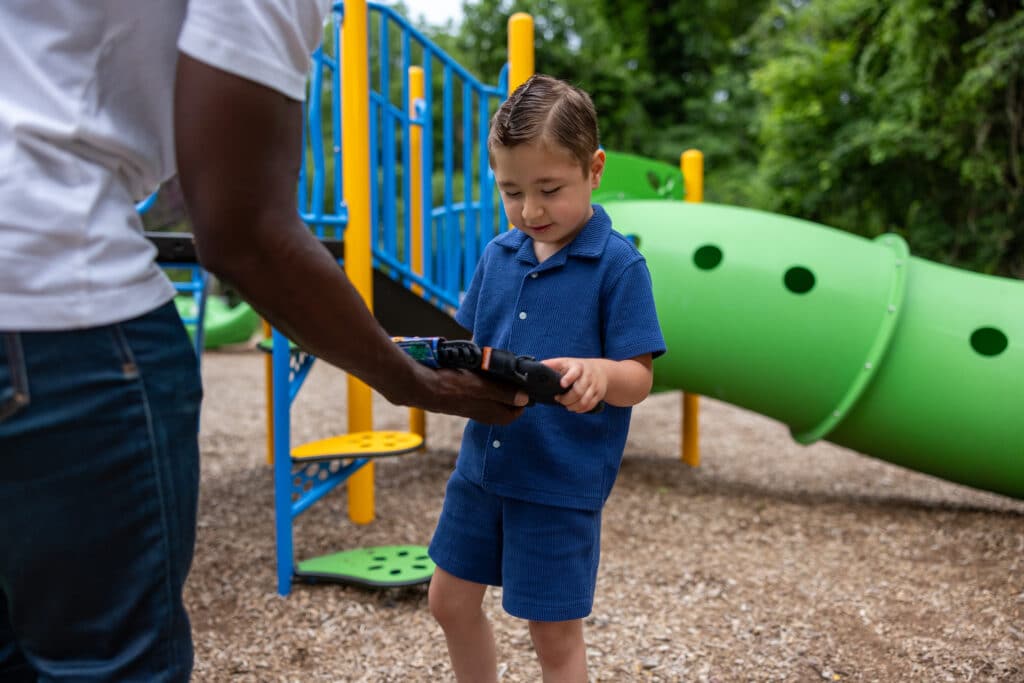
Integrating Augmentative and Alternative Communication (AAC) into Early Intervention empowers infants and toddlers with speech or language disorders to connect, express themselves, and participate more fully in daily life. For SLPs working in birth‑to‑three services, embedding AAC within Individualized Family Service Plans (IFSPs) and everyday routines allows communication goals to be functional, family-centered, and observable where children […]
Building Inclusive Classrooms: Fostering Peer Connections with AAC

Augmentative and Alternative Communication (AAC) bridges communication gaps for students with speech or language disorders, opening opportunities for them to express themselves, connect with peers, and actively participate in social settings. For speech-language pathologists (SLPs) working in schools, the use of AAC can help create an inclusive environment where all students are supported, regardless of how […]
Incorporate AAC into Literacy Routines to Enhance Reading, Print, Phonics, and Writing Skills

For individuals using Augmentative and Alternative Communication (AAC), integrating literacy routines into daily life helps AAC users develop crucial reading and writing skills, expand their vocabulary, and communicate more effectively. In fact, enhancing AAC interventions with literacy skills is one of the most effective strategies for supporting long-term communication growth. According to the American Speech-Language-Hearing […]
Adapting High-Tech AAC for Children with Cerebral Visual Impairment

Children with Cerebral Visual Impairment (CVI) often experience differences in interpreting visual information, which can affect how they interact with Augmentative and Alternative Communication (AAC) devices. With thoughtful adjustments and personalized strategies, however, high-tech AAC devices can become valuable tools that support effective communication and self-expression. By recognizing each child’s visual and learning needs, speech-language […]
Beyond the Therapy Room: 5 Real-World Places to Practice AAC

Speech-language pathologists understand that successful AAC implementation extends far beyond the therapy room. The goal of speech therapy is generalization in all environments to practice AAC so the skills taught in speech sessions can carry over to clients’ everyday lives. Community settings offer opportunities for real-life practice that can’t be achieved in clinical environments. Here are […]
Enhancing Communication Through Effective AAC Evaluations

Augmentative and Alternative Communication (AAC) evaluations are an important first step in determining the appropriate AAC solution for individuals with speech or language disorders. These evaluations include a thorough review of an individual’s existing communication modalities, formal and informal assessments, and observations, all of which help speech-language pathologists (SLPs) identify AAC solutions that will foster communication […]