
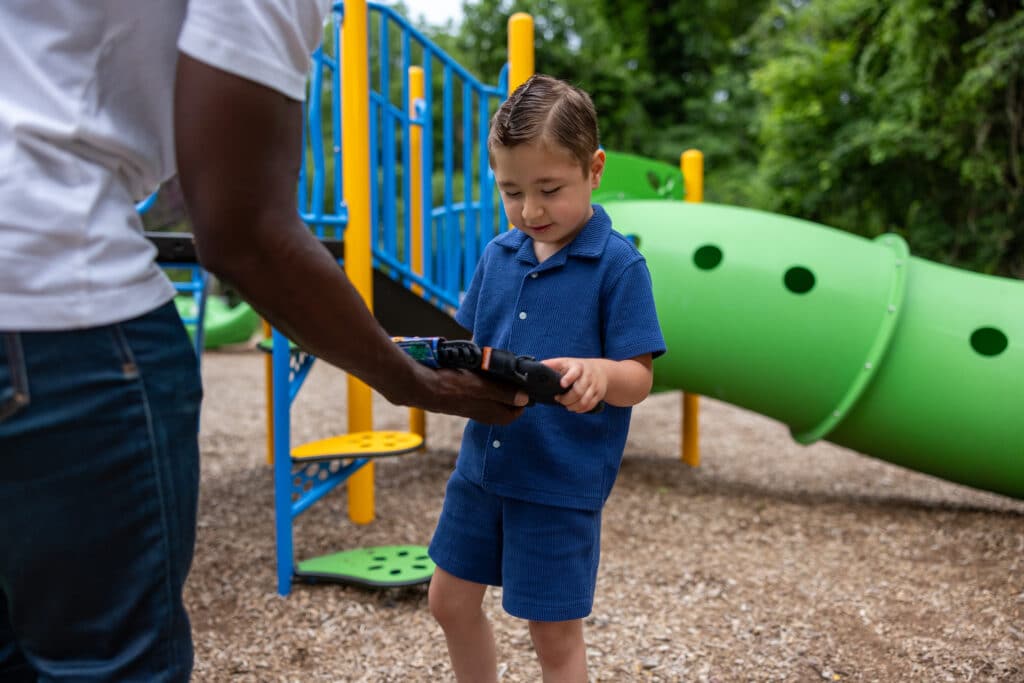
Integrating Augmentative and Alternative Communication (AAC) into Early Intervention empowers infants and toddlers with speech or language disorders to connect, express themselves, and participate more fully in daily life. For SLPs working in birth‑to‑three services, embedding AAC within Individualized Family Service Plans (IFSPs) and everyday routines allows communication goals to be functional, family-centered, and observable where children actually spend their time.
As AAC is woven into typical routines, caregivers gain confidence as communication partners, and children become more active participants in their interactions. This article outlines practical ways SLPs can identify communication needs, develop routines‑based IFSP goals, coach caregivers, and coordinate teams across settings—using AAC devices, including high‑tech speech generating devices such as QuickTalker Freestyle™, to support meaningful, functional communication from the very start.
What is AAC and Why It Matters
According to ASHA’s official overview of AAC, AAC encompasses any system, tool, or method used to supplement or replace spoken language. It ranges from low-tech picture boards to sophisticated high-tech speech generating devices. For very young children, early exposure to AAC has the potential to:
- Expand vocabulary and support language development
- Enhance social interactions
- Reduce frustration by providing reliable ways to express needs or preferences
Identifying and addressing communication barriers early on helps SLPs support children in their communication journey.
Identifying Communication Needs in the Birth-to-Three Population
Accurate recognition of a child’s specific communication needs is the first step in developing an effective AAC plan. Observations of daily behaviors, interactive discussions with caregivers, and insights from developmental knowledge all help determine the most appropriate AAC supports. This foundational process enables families and SLPs to set contextually relevant goals and choose devices that meet the child’s needs effectively.
Observing Early Communication Signals
Young children often express themselves through nonverbal signals such as gestures, facial expressions, varied cries, and spontaneous sounds. When assessing these cues, SLPs consider factors like:
- Consistency: Are specific movements or vocalizations consistently used to request or comment?
- Variety: Does the child demonstrate multiple approaches (e.g., reaching, looking, vocalizing)?
- Effectiveness: Are caregivers reliably interpreting and responding to these signals?
These observations reveal the child’s existing strengths and guide how AAC might enhance daily interactions. Additionally, caregiver conversations often highlight cultural practices, home language environments, or family traditions that influence which AAC strategies are most appropriate. Resources from Zero to Three offer further strategies to support family engagement.
Partnering with Families
Insight from parents and other family members is necessary for success. Because caregivers understand the child’s routines, interests, and personality best, they can identify specific moments of communication difficulty or natural engagement. Integrating AAC strategies into these routine experiences makes interventions more effective. Ultimately, this approach empowers families and gives SLPs the insight needed to develop tailored goals and strategies.
Developing Routines‑Based IFSP Goals for AAC
An Individualized Family Service Plan (IFSP) ensures that AAC goals align both with the family’s vision and the child’s developmental needs. These plans are designed to be family-centered, practical, and measurable, and in Early Intervention they are most effective when written as routines‑based goals—tied directly to everyday activities like play, meals, and bath time so progress can be observed in real contexts.
Centering on Family Priorities and Streamlining Goals
Meaningful IFSP goals reflect the daily concerns and aspirations of caregivers. For example, if a parent notes that a toddler, who loves building blocks, often becomes upset when unable to request help, an IFSP goal might be:
“During block play, the child will use the AAC device to request help at least twice during a 30-minute session.”
Such a goal is:
- Specific: Linked to a clearly defined action and routine.
- Measurable: Focused on how frequently the AAC is used during the activity.
- Achievable: Matches current skills and stretches them gradually.
- Relevant: Based directly on family-identified challenges.
- Time-bound: Completed within a set duration.
Grounding goals in actual routines makes them more meaningful and increases buy-in from families.


Embedding AAC in Everyday Routines
AAC is most effective in Early Intervention when it is woven into the routines families already do, as part of a routines‑based intervention approach, rather than treated as a separate “therapy task.” An SLP can help caregivers embed AAC into play, meals, storytime, and transitions so infants and toddlers get frequent, meaningful opportunities to communicate. A high‑tech speech generating device like QuickTalker Freestyle™ can move with the child across these activities, keeping communication accessible in any setting.
Playtime
Play offers rich opportunities for language, joint attention, and social interaction.
- Collaborate with caregivers to identify favorite toys and games.
- Model how to label toys and actions on the AAC system (e.g., “ball,” “go,” “up,” “build”).
- Teach caregivers to prompt the child to request and comment (e.g., “more,” “help,” “again,” “my turn,” “uh‑oh”) using the device.
Position the AAC device on the floor, a stand, or attached to a stroller so it is easy to access during play. In session, explicitly coach caregivers to model a few key core words while following the child’s lead.
Mealtime
Meals and snacks are predictable and repeat throughout the day, making them ideal for building consistency.
- Work with families to select a small set of core words for mealtimes (e.g., “more,” “drink,” “all done,” “like,” “don’t like”).
- Demonstrate how to pair AAC selections with real actions (e.g., tap “more” on the AAC device, while asking “do you want more food?”).
- Help caregivers interpret and respond to all communicative attempts, not only perfect device use.
Encourage families to keep the device within the child’s visual field at the table. Target increased independent use of a few mealtime words within a set time frame.
Storytime
Books and songs support vocabulary, joint attention, and early literacy.
- Model choice‑making (e.g., using AAC to choose the book or song).
- Highlight key descriptive and action words relevant to the story (e.g., “big,” “little,” “jump,” “sleep,” “happy”).
- Coach caregivers to pause and wait for the child to comment or request “again” using the device.
The AAC device can be placed beside the book or held on a lap for shared access. In session, show caregivers how to connect pictures in the book to symbols on the device to build word–symbol associations.
Transitions and Daily Activities
Transitions and self‑care routines can be challenging but are rich with communication opportunities.
- Identify the most stressful transitions (e.g., getting dressed, leaving the park) and pre‑teach core words such as “go,” “stop,” “wait,” “help,” “no,” “finished.”
- Use AAC to preview what’s next (e.g., “play → snack → bath → bed”) and support understanding.
- Model how to validate the child’s communication (e.g., acknowledging “no” while still following through with the routine when necessary).
By explicitly coaching caregivers to use AAC within everyday routines – and by modeling consistent, functional use – SLPs can help infants and toddlers experience AAC as a reliable way to be heard throughout the day, not only during therapy sessions.
Coaching Families and Measuring Progress
Ongoing coaching and consistent tracking of progress are important to ensuring AAC’s continuing impact. Many caregivers initially feel overwhelmed by new tools like high-tech speech generating devices or picture boards. The SLP’s role is to simplify these processes, breaking down the task into manageable steps and highlighting routine moments for AAC use.
Coaching Families to Utilize AAC
Effective caregiver coaching uses hands-on demonstrations and active family participation:
- Show device use within familiar routines, such as during snack time.
- Begin with core vocabulary words that are immediately relevant (e.g., “help,” “more,” “go”).
- Encourage caregivers to model AAC usage so the child consistently sees the behavior in practice.
- Reinforce each successful attempt with praise or by providing the requested item.
Regular coaching helps shift caregiver feelings from overwhelmed to competent and engaged in the communication journey.
Tracking and Documenting Progress
Regular observation and data collection are vital to assess progress and refine strategies over time:
- Use observation checklists to record instances of correct symbol use or gestures.
- Count the frequency of device interactions or spontaneous communication efforts.
- Set clear success criteria to gauge progress.
By documenting these improvements, families can celebrate small gains and understand how the child is progressing in their communication skills. If necessary, the SLP can modify any aspects of the plan to better suit the child’s evolving needs. These observations and data points can then be used to update IFSP outcomes and refine routines‑based goals, ensuring the written plan continues to match what is happening in daily life.

Practical Strategies for Addressing Common Challenges in AAC Implementation
Even with thorough planning, challenges may arise. Families might struggle to integrate AAC at home or face situations where a child initially rejects a new system. Addressing these issues early on can foster a more positive experience for both the child and caregivers.
Overcoming Resistance to Change
Some children or caregivers may initially resist using AAC due to unfamiliarity. Pairing AAC use with a favorite toy or reward can help shift attitudes. As the child experiences success using the device in a meaningful situation, motivation to continue using AAC typically increases.
Creating a Supportive Environment
A supportive environment emphasizes rewarding attempts at communication over perfect execution. This may involve:
- Verbal feedback where both SLPs and caregivers label the child’s communicative efforts (e.g., “I see you selected ‘bubbles’—let’s play with bubbles!”).
- Visual cues on the device to remind the child where to find words.
- Emotional support through praise and positive reinforcement, turning mistakes into effective learning experiences.
Extending AAC Beyond the Home: Teams and Learning Environments
AAC is most powerful for infants and toddlers when it is used the same way across home, childcare, early learning programs, and the community. An SLP can help teams keep expectations, vocabulary, and access consistent. A portable system like QuickTalker Freestyle™ makes this easier when everyone understands how to use it.
Shared Words, Shared Expectations
- Select a small, core set of words (e.g., more, help, go, stop, all done, like, no) to be modeled in every setting.
- Keep vocabulary in stable locations on the device so the child doesn’t have to relearn layouts across environments.
- Provide simple quick-reference guides (paper or digital) that show:
- How to model vocabulary on the device
- 1–2 example uses in that setting (e.g., more at snack, in bubbles, on the swing).
Coordinating Across Team Members
- With educators and childcare staff:
- Train on access (charged, in reach, visible) and modeling vocabulary during circle, centers, and transitions.
- With OT/PT and other therapists:
- Problem-solve positioning, mounting, and motor demands so the child can reliably access QuickTalker Freestyle™ in all environments.
- With families and service coordinators:
- Clarify who is responsible for transport, charging, and daily access, and address any policy or logistics barriers.
By aligning core vocabulary, layout, and basic modeling strategies across partners, a unified AAC experience is created. The child learns that their system—whether at home, in childcare, or in therapy—is a consistent, reliable way to communicate.
Staying Evidence‑Based in a Changing AAC Landscape

Effective AAC intervention in Early Intervention depends on more than choosing the right device—it requires ongoing engagement with research, evolving technologies, and professional communities. By staying current with evidence, monitoring innovations in AAC tools, and collaborating with colleagues and community partners, SLPs can confidently reassure families that their recommendations are grounded in best practice and adapt their approach as each child’s needs and context change.
Integrating Research into Practice
Recent studies emphasize the benefits of multimodal communication approaches for young AAC users. Combining visual, tactile, and auditory inputs can help reinforce comprehension. For instance, an SLP may pair a spoken word with the corresponding symbol on a speech generating device, facilitating both imitation and independent symbol use. Staying informed on emerging techniques ensures interventions remain adaptable and effective. Resources such as ASHA and the AT3 Center resource library are valuable for professional updates.
Future Directions and Innovations in AAC
The field of AAC continues to evolve, spurring the development of more user-friendly and adaptable technologies. Advancements in dynamic screen interfaces, flexible switch options, and natural-sounding voice synthesis improvements help create devices that are easier to customize and more responsive to the child’s identity. Additionally, ongoing research is exploring ways to make AAC solutions more accessible for culturally and linguistically diverse families, ensuring that all children benefit from tailored communicative support.
Expanding Professional Collaboration
Professional collaboration extends beyond the establishment of an AAC device. SLPs benefit from engaging with community organizations, local university programs, and fellow clinicians. Whether online or in person, these professional exchanges foster new ideas, refine intervention techniques, and support collective progress. Cultivating these partnerships contributes to a network dedicated to inclusive and evidence-based communication strategies.
Laying the Groundwork for Lifelong Communication
Integrating AAC into Early Intervention offers transformative opportunities for infants and toddlers to build foundational communication skills. When SLPs embed AAC in familiar routines, write routines‑based IFSP goals that reflect family priorities, and coach caregivers as primary communication partners, children gain meaningful practice in the moments that matter most.
This ongoing work—observing progress, adjusting vocabulary and layouts, and coordinating across home and community settings—supports growth in language, social‑emotional connection, and participation, all within each child’s unique context.
Ready to explore how AAC can enhance communication for a child in Early Intervention? Schedule your consultation with an AbleNet SLP to discover personalized strategies and learn how the QuickTalker Freestyle™ can seamlessly integrate into the daily routines you’re already targeting in your IFSPs.


